Traveling between Riyadh and Amman offers a captivating journey across the heart of the Middle East, linking Saudi Arabia with Jordan’s historic capital. The route passes through vast deserts, ancient trade corridors, and culturally rich regions shaped by centuries of civilization. Along the way, travelers can explore archaeological sites, heritage towns, and traditional markets. The scenery transitions from golden sand plains to rocky plateaus and fertile valleys. Each stop highlights local traditions, architecture, and cuisine. This journey blends history, culture, and adventure into a memorable travel experience.
Top best Stops Between Riyadh and Amman
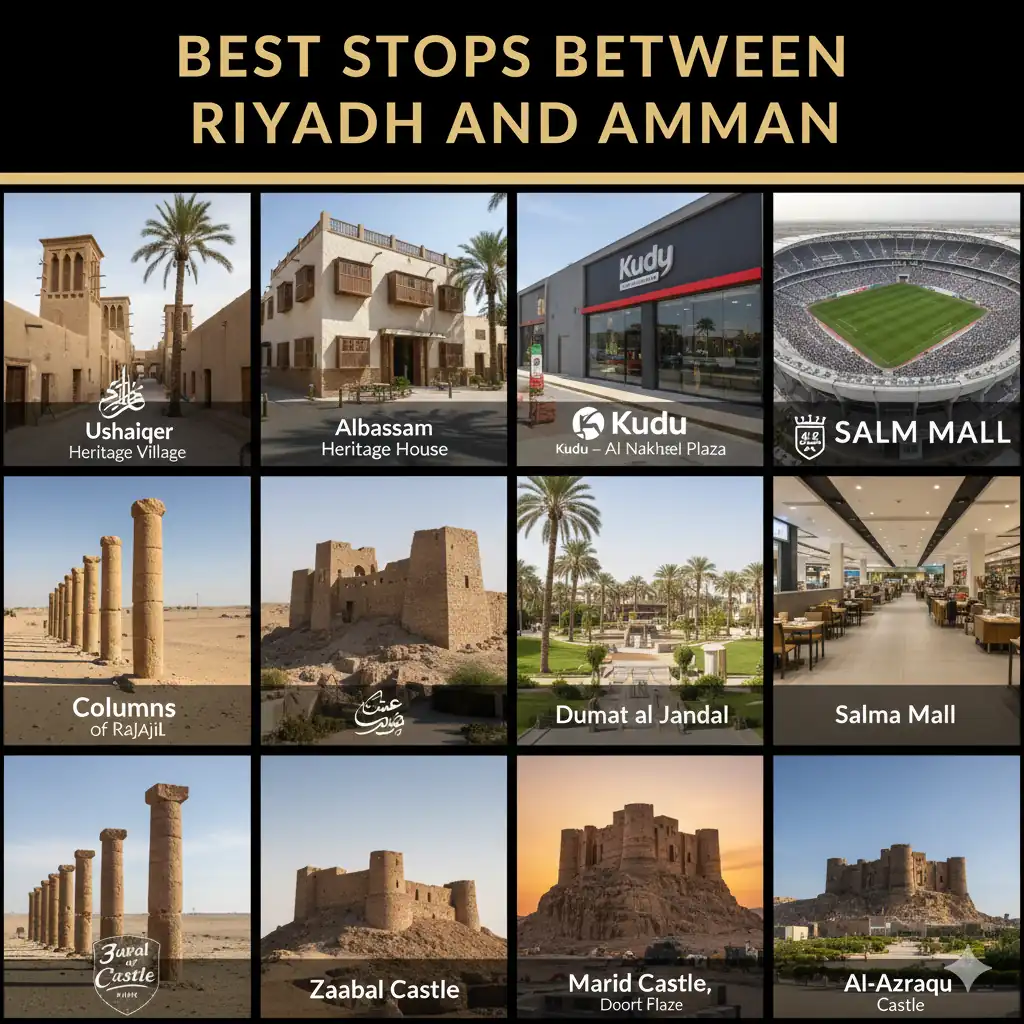
Traveling between Riyadh and Amman includes several rewarding stops that enhance the journey. Along the route, travelers can explore historic towns, ancient ruins, and cultural landmarks shaped by old trade routes. The landscapes shift from wide desert expanses to dramatic rock formations and fertile valleys. Traditional markets and heritage sites offer insight into local life and history. These stops make the Riyadh–Amman route scenic, educational, and memorable.
1. Ushaiqer Heritage Village
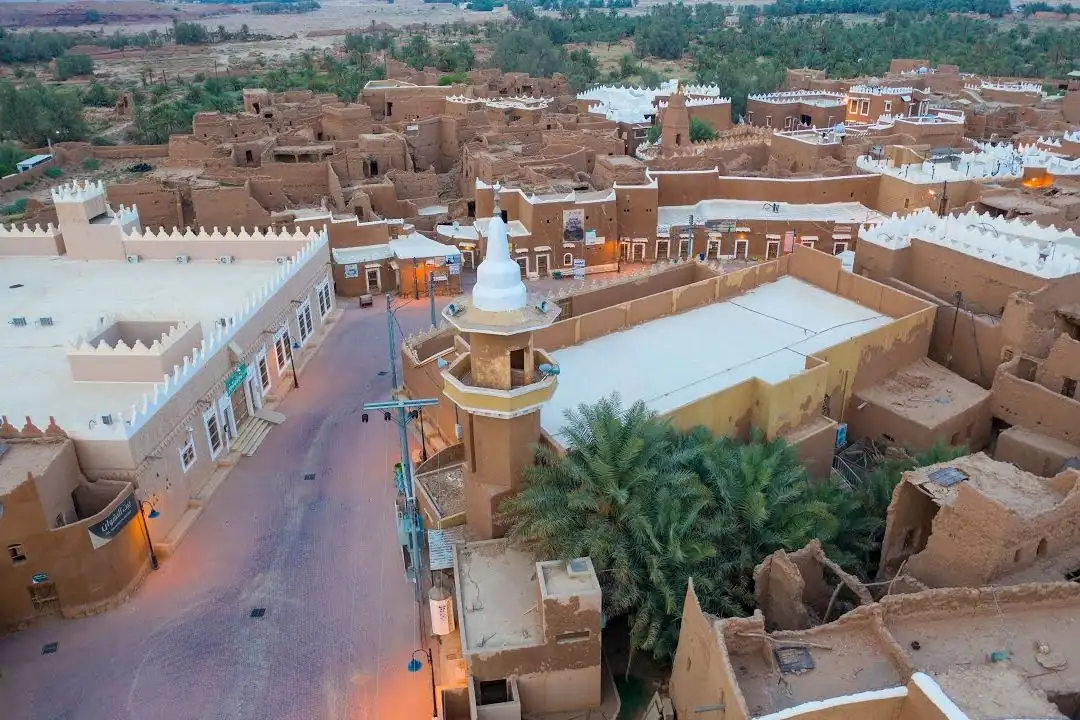
Ushaiqer Heritage Village is one of the oldest inhabited villages in Saudi Arabia, located about two hours from Riyadh. The village is surrounded by traditional walls and showcases classic Najdi mud-brick architecture. Visitors can walk through narrow lanes, old homes, mosques, and shaded courtyards that reflect centuries-old lifestyles. The on-site museum preserves antique household items, tools, and everyday objects from earlier generations. The area is easy to explore and suitable for families and elderly visitors. Ushaiqer offers a peaceful atmosphere away from city crowds. It is an excellent destination for cultural tourism and photography lovers.
2. Albassam Heritage House
Albassam Heritage House is a beautifully restored historical museum in Unaizah, Qassim. It represents the lifestyle of wealthy merchant families from the past. The museum features traditional architecture, wooden doors, courtyards, and rooms filled with antiques. Visitors can see old documents, furniture, and cultural artifacts displayed in an organized manner. The experience is educational and easy to understand for all ages. The museum reflects Saudi Arabia’s strong commitment to preserving heritage. It is one of the finest cultural attractions in the Qassim region.
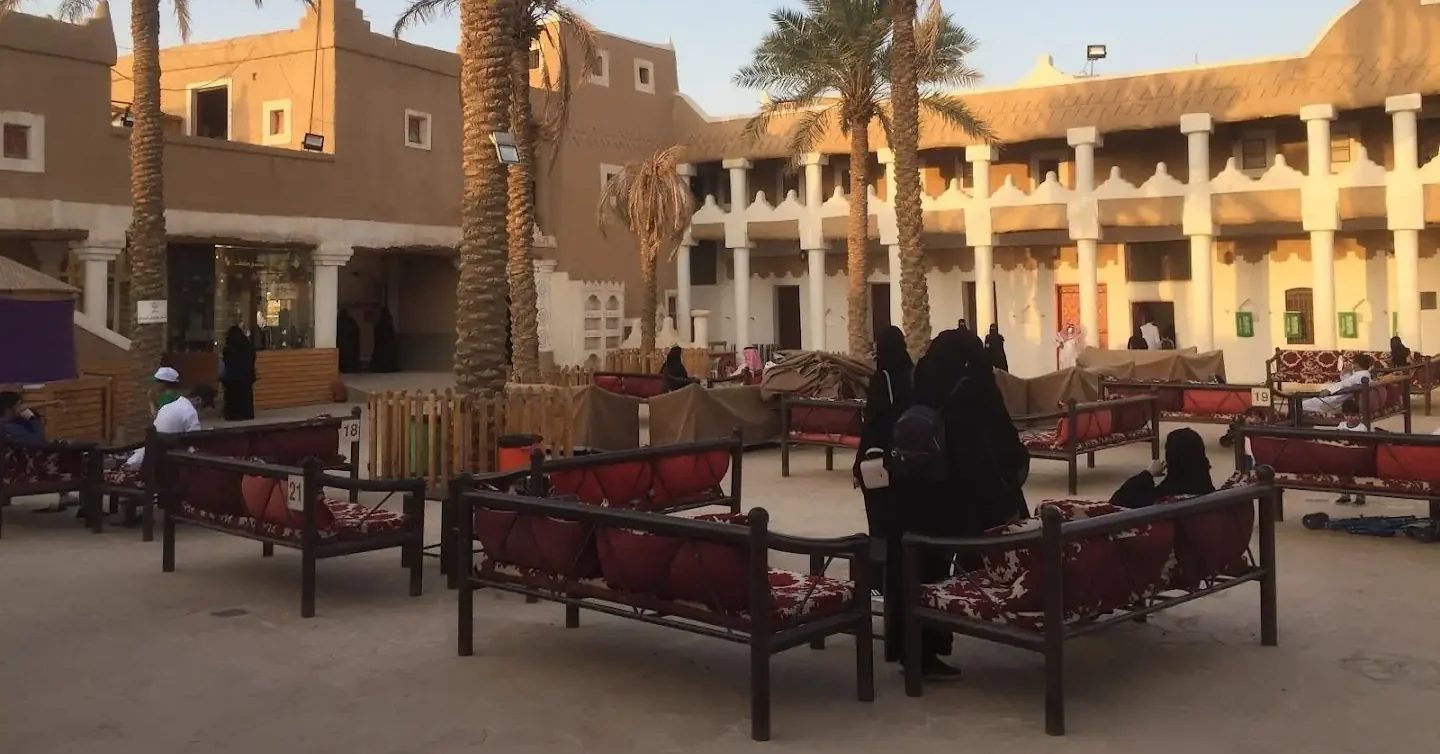
3. Kudu – Al Nakheel Plaza
Kudu at Al Nakheel Plaza is a popular dining spot for locals and travelers. Located inside a shopping plaza, it offers convenience, comfort, and quick service. The restaurant serves breakfast meals, chicken dishes, burgers, and desserts. It is affordable and suitable for families with children. Being inside a mall makes it ideal during hot weather. Visitors can combine dining with shopping and entertainment. It is a practical stop during city exploration in Buraydah.

4. King Abdullah Sport City Stadium
King Abdullah Sport City Stadium is a major sports complex in the Qassim region. It hosts football matches, tournaments, and community events. The stadium has modern facilities, seating areas, and well-maintained grounds. On match days, the atmosphere is energetic and lively. The complex also represents Saudi Arabia’s growing sports culture. It is easily accessible from within the city. Sports fans will find this location engaging and memorable.

5. Salma Mall
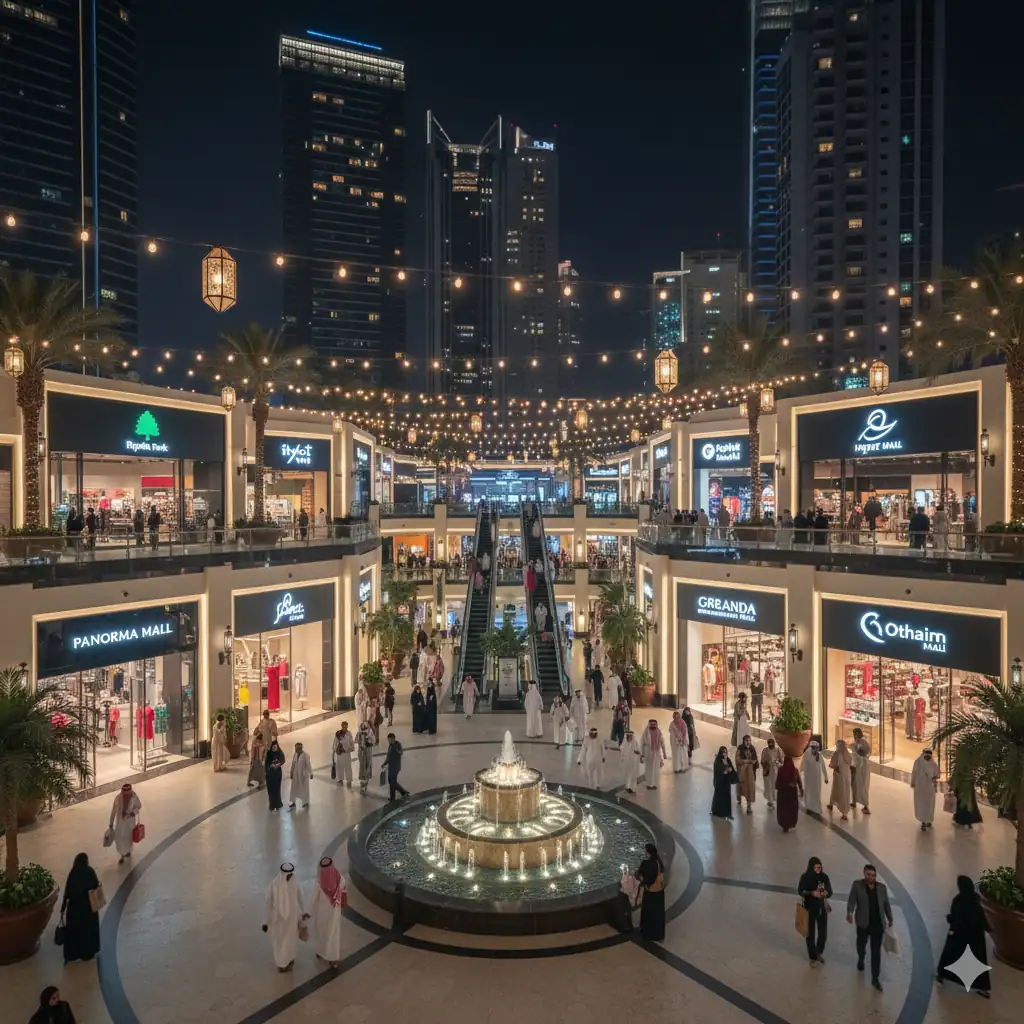
Salma Mall is a well-known shopping destination in Hail City. It offers a variety of retail stores, perfume shops, restaurants, and entertainment options. The mall is popular for casual shopping and social gatherings. Visitors can explore local and international brands. The comfortable indoor environment makes it suitable for families. Salma Mall is also a good stop for souvenirs and fragrances. It adds modern convenience to a travel itinerary in northern Saudi Arabia. Discover Gulf attractions with Best Stops Between Riyadh and Muscat and Best Stops Between Riyadh and Jerusalem

6. Columns of Rajajil
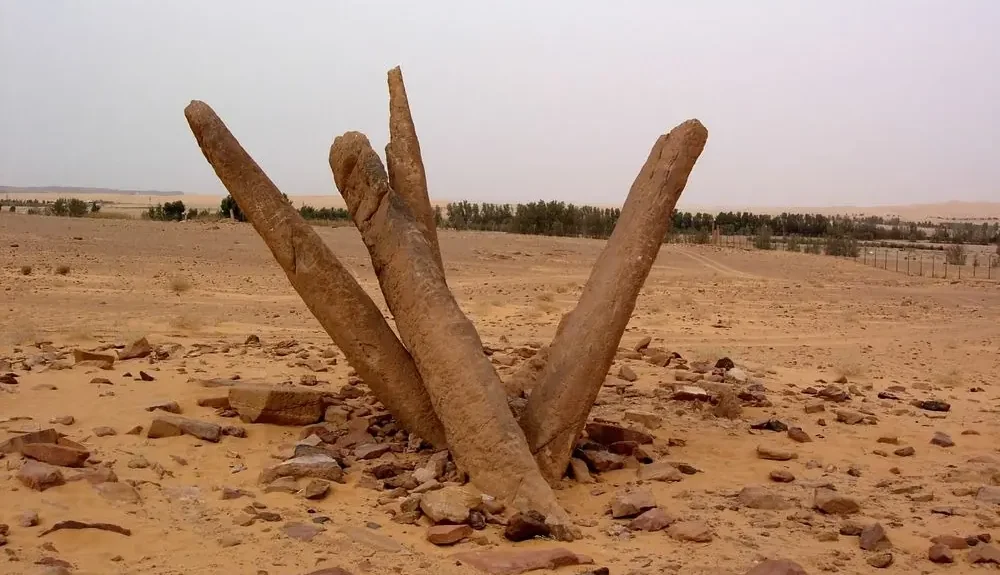
The Columns of Rajajil are mysterious ancient stone pillars located near Sakaka. These tall stones are believed to date back thousands of years. Their exact purpose remains unknown, adding to their fascination. The site is surrounded by open desert, creating a dramatic landscape. Visitors often feel a strong sense of ancient history here. It is a quiet and peaceful location for exploration. Archaeology and history enthusiasts will find this site especially intriguing.
7. Zaabal Castle
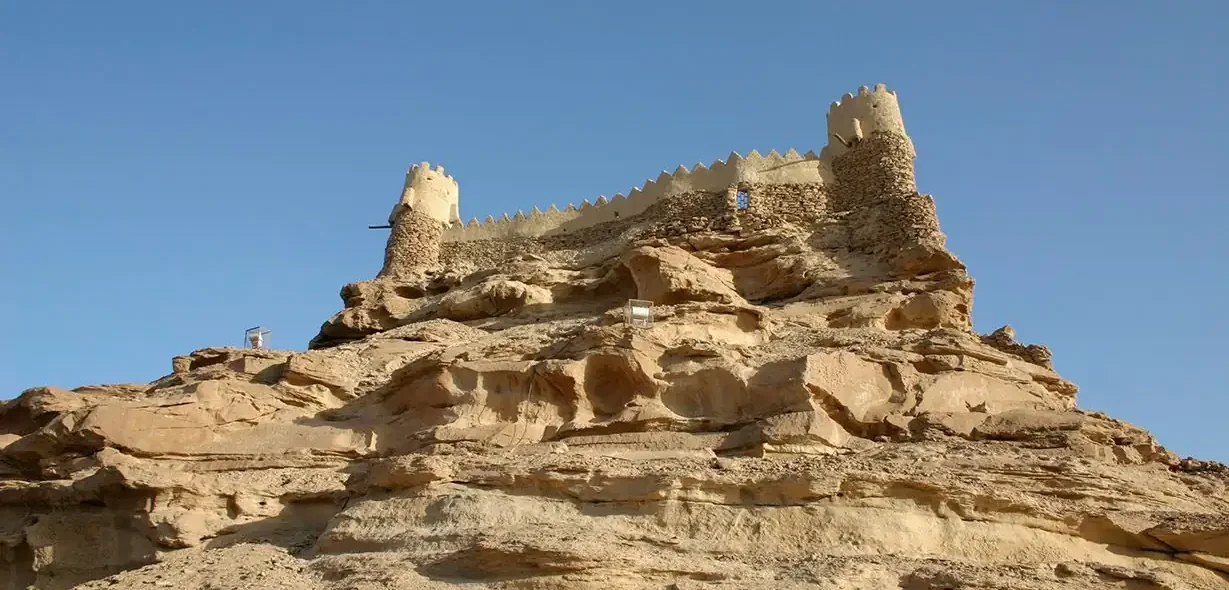
Zaabal Castle is a historic fort overlooking the city of Sakaka. Built from stone and clay, it once served as a defensive structure. The castle includes towers, walls, and a water reservoir. Visitors can climb up to enjoy panoramic views of the surrounding area. Though partially ruined, it still reflects early military architecture. The site is best visited during cooler hours. It is an important historical landmark in Al Jawf Province.
8. Dumat al-Jandal
an ancient city rich in historical ruins and archaeological significance. It was once a major settlement along trade routes. The city is located about 37 kilometers from Sakaka. Visitors can explore remains from pre-Islamic and Islamic periods. The area holds cultural and historical importance for northern Saudi Arabia. Its quiet environment allows for reflective exploration. Dumat al-Jandal is ideal for travelers interested in ancient civilizations.
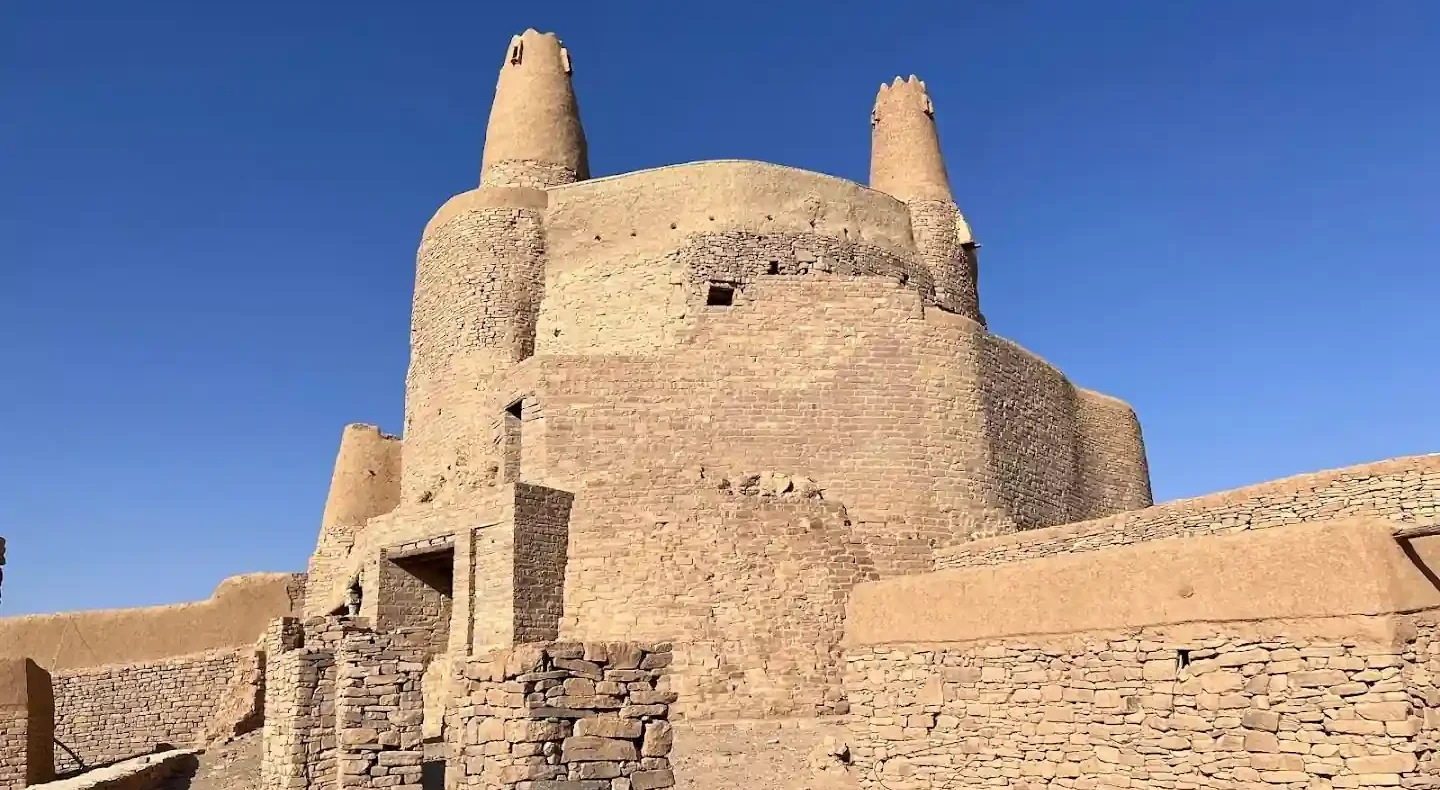
9. Marid Castle, Dumat al-Jandal
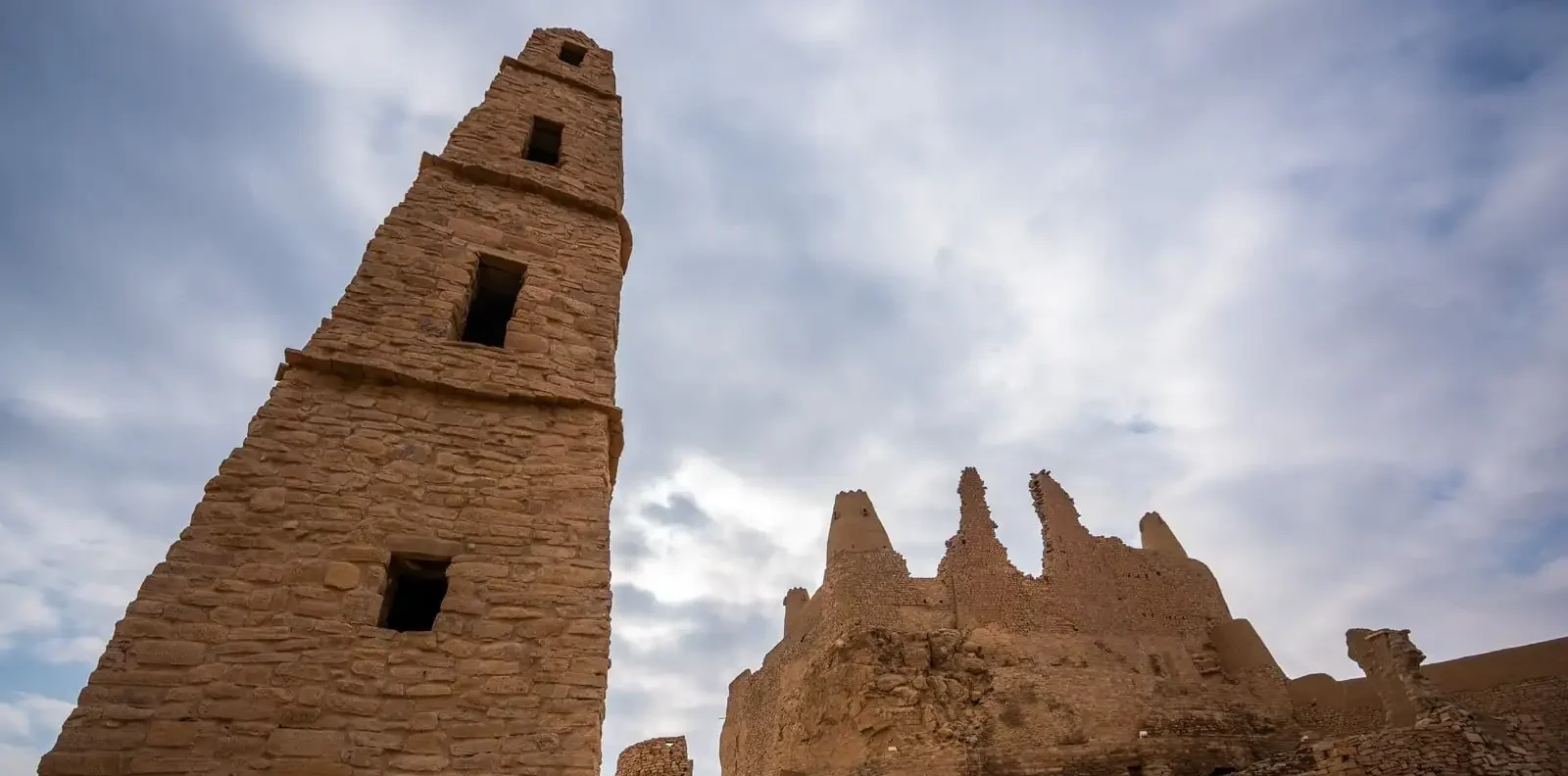
Marid Castle is one of the most impressive historical forts in Saudi Arabia. It stands prominently above Dumat al-Jandal. The castle features thick stone walls, watchtowers, and strategic viewpoints. Visitors can walk through its corridors and explore its structure. The castle is remarkably well preserved compared to many others. It offers stunning views of the surrounding oasis. Marid Castle is a must-visit attraction in Al Jawf.
10. Al-Azraq Castle
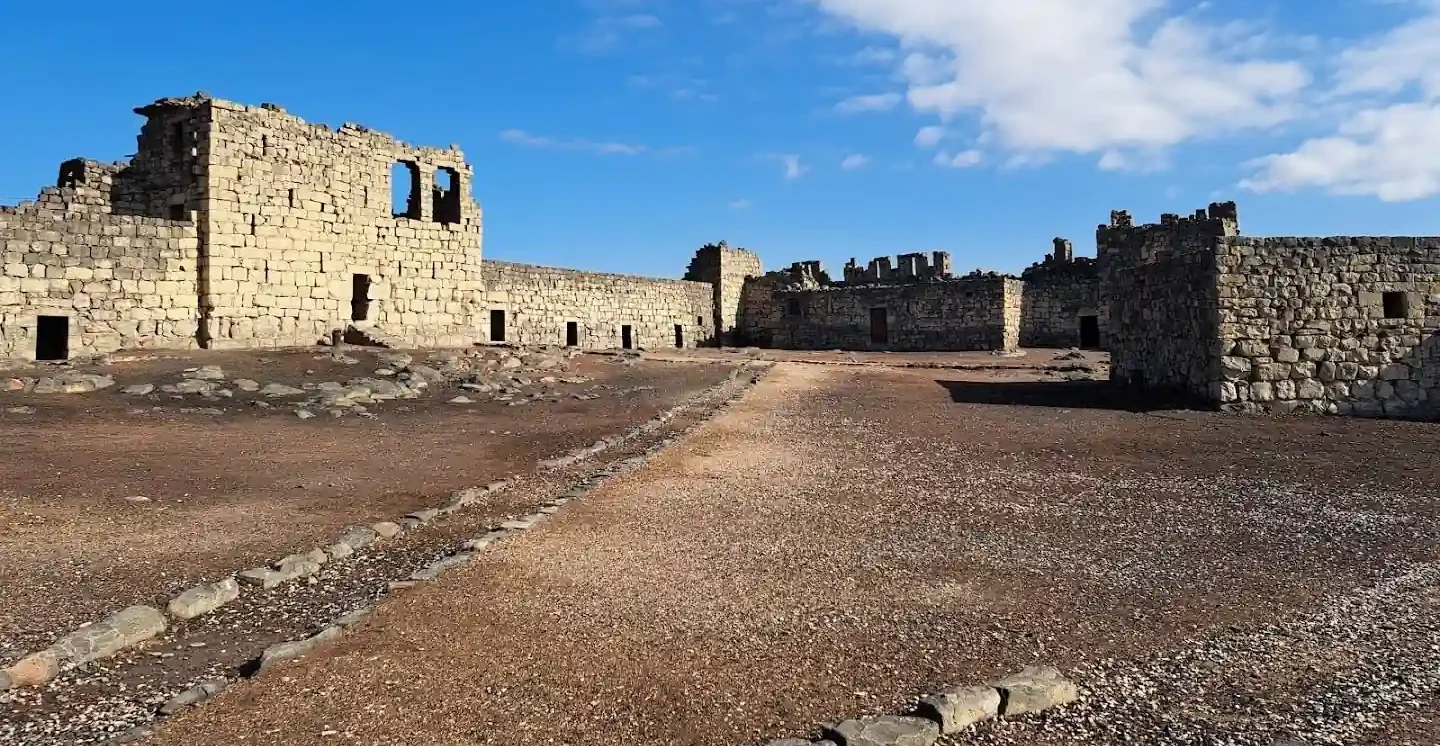
Al-Azraq Castle is a historic basalt fortress located in eastern Jordan. Built from black stone, it dates back to the 13th century. The castle includes ancient inscriptions, a small mosque, and massive stone doors. It played an important role in regional defense and history. Visitors can freely walk through its ruins. The structure’s simplicity highlights its military purpose. It is a valuable stop for history lovers traveling through Jordan.