
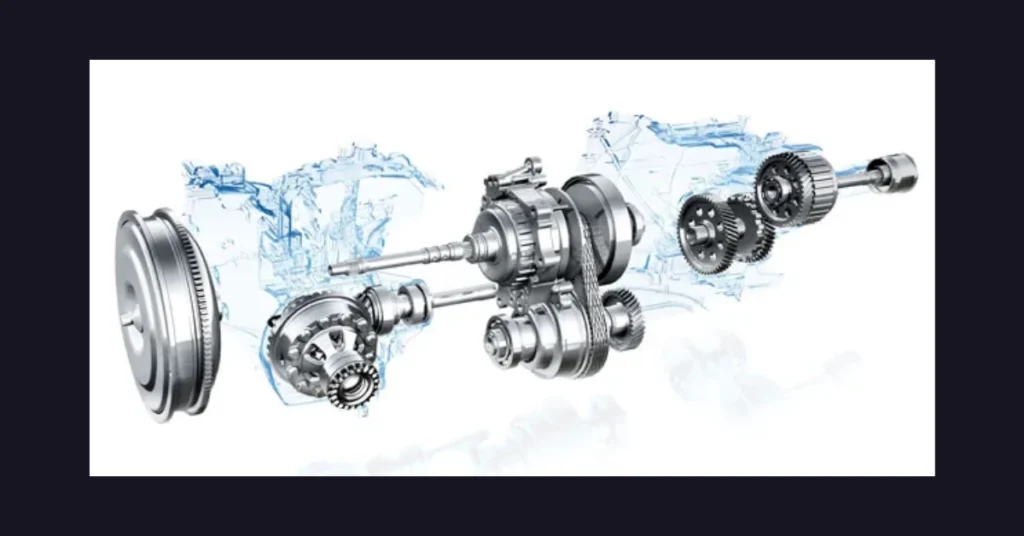
When shopping for a car, you may come across vehicles advertised as having a CVT transmission. But what exactly is a CVT, how does it work, and why is it different from traditional automatic or manual transmissions? Understanding CVT (Continuously Variable Transmission) is crucial for anyone buying a car, whether new or used. This guide will explain CVT in simple terms, explore its benefits and drawbacks, common issues, and help you decide if it’s the right choice for you.
Understanding the Basics: What Is a CVT?
CVT stands for Continuously Variable Transmission. Unlike traditional automatic transmissions with a fixed number of gears, a CVT doesn’t have set gears at all. Instead, it provides a seamless range of gear ratios, allowing the engine to operate at the most efficient RPM for any speed.
Key Points About CVT:
-
No fixed gears: Smooth acceleration without noticeable gear shifts.
-
Fuel efficiency: Often more efficient than conventional automatic transmissions.
-
Performance: Can feel different from traditional automatics—sometimes more “rubbery” or less responsive to aggressive acceleration.
Think of a CVT as a transmission that can “slide” through gears infinitely, rather than jumping from one gear to the next.
How a CVT Transmission Works
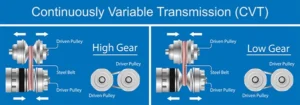
A CVT transmission works differently from standard automatics. The most common type is the belt-and-pulley CVT, which consists of two variable-diameter pulleys connected by a metal belt.
-
Primary Pulley (Drive Pulley): Connected to the engine.
-
Secondary Pulley (Driven Pulley): Connected to the wheels.
-
Metal or Rubber Belt: Transfers power between the pulleys.
By adjusting the diameter of the pulleys, the CVT continuously changes the gear ratio. This allows the engine to stay at its optimal RPM, whether you’re accelerating, cruising, or climbing a hill.
Other types of CVTs include torque converter-based CVTs and toroidal CVTs, but the belt-and-pulley system is the most common in consumer vehicles.
CVT vs. Traditional Automatic Transmission
Understanding the difference between CVT and traditional automatic transmissions helps explain why CVTs are growing in popularity.
| Feature | CVT | Traditional Automatic |
|---|---|---|
| Gear Ratios | Infinite, continuously variable | Fixed (usually 4–10 gears) |
| Smoothness | Seamless acceleration | Noticeable gear shifts |
| Fuel Efficiency | Typically higher | Lower, depends on driving |
| Maintenance Complexity | More complex internally | Simpler to service |
| Driving Experience | “Rubbery” feel, less sporty | Predictable gear transitions |
Key takeaway: CVTs focus on efficiency and smoothness, while traditional automatics focus on power feel and predictability.
Benefits of CVT Transmissions
CVTs offer several advantages, making them increasingly common in modern cars.
1. Fuel Efficiency
By keeping the engine in its optimal RPM range, CVTs reduce fuel consumption compared to traditional automatics. This is especially noticeable in city driving and stop-and-go traffic.
2. Smooth Acceleration
Without gear shifts, CVTs provide seamless acceleration. There’s no “shift shock,” making for a more comfortable driving experience.
3. Lightweight Design
CVTs are generally lighter than traditional automatics with multiple gears. This contributes to better fuel economy and handling.
4. Simplified Driving
For beginner drivers, CVTs are easy to handle. There’s no need to manage gear shifts or worry about stalling like in manual transmissions.
Drawbacks and Common Issues with CVTs
Despite their benefits, CVTs have some downsides that potential buyers should know. Expand drivetrain understanding through automotive culture in What Does JDM Stand For and mechanical functionality explained in What Does an Alternator Do.
1. Driving Feel
Many drivers describe CVTs as feeling “rubbery” or “unresponsive.” During hard acceleration, the engine may rev higher without a corresponding increase in speed, which can feel unusual.
2. Longevity Concerns
CVTs have historically been less durable than traditional automatic transmissions, especially under heavy load or aggressive driving. However, improvements in engineering have addressed many reliability concerns in newer models.
3. Maintenance Costs
Repairs or replacements can be more expensive due to the complexity of the belt-and-pulley system. Regular maintenance is crucial for longevity.
4. Noise
Some CVTs produce a high-revving sound under acceleration, which can be bothersome to some drivers.
Common Cars with CVT Transmissions
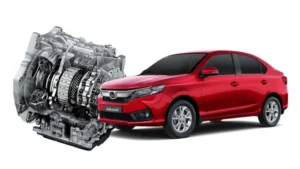
CVTs are widely used, especially in small to mid-sized cars and hybrids, where fuel efficiency is a priority. Examples include:
-
Honda Civic (2016–present)
-
Toyota Corolla (2014–present)
-
Nissan Altima (2013–present)
-
Subaru Outback/Forester (2015–present)
-
Toyota Prius (Hybrid models)
CVTs are less common in high-performance or heavy-duty vehicles, though some sporty variants now feature advanced CVTs with simulated gear steps to mimic a traditional driving feel.
CVT vs. Manual Transmission
Some car enthusiasts prefer manual transmissions for control and driving engagement. Here’s how CVTs compare:
| Feature | CVT | Manual Transmission |
|---|---|---|
| Control | Limited | Full control over gears |
| Learning Curve | Easy | Requires skill |
| Fuel Efficiency | Higher | Lower in most cases |
| Driving Comfort | Smooth | Can be jerky in traffic |
| Maintenance | Moderate/Complex | Relatively simple |
For city commuters or hybrid vehicles, CVTs usually outperform manuals in efficiency and convenience.
Tips for Driving a CVT Vehicle
Driving a CVT requires minor adjustments, especially if you’re used to traditional automatics or manual transmissions:
-
Avoid Hard Launches: Excessive acceleration can wear the belt over time.
-
Use Engine Braking: On steep declines, downshift if your CVT allows it to reduce stress on brakes.
-
Regular Maintenance: Follow manufacturer recommendations for fluid changes and inspections.
-
Listen to the Engine: CVTs may make high-revving sounds; monitor for unusual noises which may indicate belt wear.
Maintenance Tips for CVTs

Proper maintenance can significantly extend the life of a CVT:
-
CVT Fluid: Always use the manufacturer-recommended fluid. CVTs require specific fluids that differ from standard automatic transmission fluids.
-
Scheduled Changes: Replace fluid at recommended intervals, usually between 30,000–60,000 miles.
-
Check for Leaks: CVT fluid leaks can lead to major transmission problems.
-
Avoid Overloading: Heavy loads or towing can stress the CVT belt and pulleys.
Are CVTs Reliable?
Modern CVTs have improved reliability significantly. Automakers like Honda, Toyota, and Subaru have refined CVT technology to handle daily driving demands. Common signs of CVT wear include:
-
Delayed acceleration
-
Shuddering or vibration at low speeds
-
Unusual noises or high revving under acceleration
Regular maintenance and gentle driving habits can prevent most issues.
Best Cars with CVT Transmissions
If you’re considering a CVT-equipped car, here are some models known for reliability and smooth driving:
-
Honda Accord / Civic – Excellent fuel efficiency, refined CVT feel
-
Toyota Corolla / Camry – Widely praised for reliability and hybrid efficiency
-
Subaru Outback / Forester – Standard CVT with AWD capability
-
Nissan Altima – Smooth CVT performance, comfortable ride
-
Toyota Prius – Hybrid with optimized CVT for maximum fuel efficiency
Final Thoughts
A CVT transmission is an innovative alternative to traditional automatic or manual gearboxes. By offering seamless acceleration, better fuel efficiency, and a simplified driving experience, CVTs have become common in modern vehicles. However, they may feel different to drivers accustomed to conventional automatics, and maintenance and longevity considerations are important.
Whether a CVT is right for you depends on your driving style, vehicle type, and priorities. For city commuting, hybrids, or fuel-conscious drivers, CVTs often deliver the most benefits. For performance enthusiasts or heavy-duty use, a traditional automatic or manual may still be preferable.
Understanding the technology behind CVTs empowers you to make a more informed car-buying decision and enjoy your vehicle to the fullest.