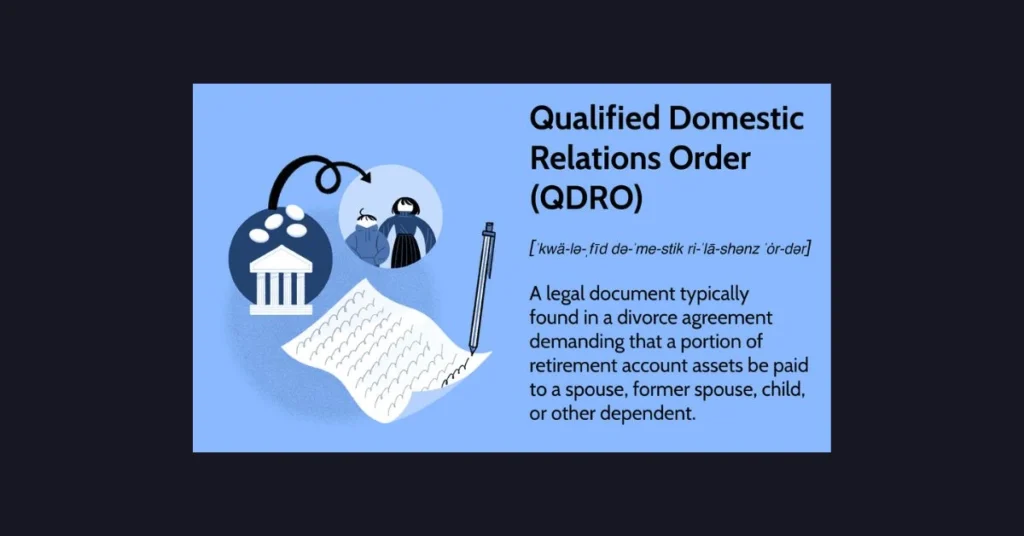
Dividing retirement assets during divorce can feel complex, and one term that often comes up is a QDRO, or Qualified Domestic Relations Order. Many people wonder: Who is responsible for filing a QDRO, and how does the process work? The answer can vary depending on jurisdiction, the retirement plan involved, and the parties’ legal representation. This article explains QDRO filing responsibility, the roles of attorneys and plan administrators, timelines, and what happens if the order isn’t filed, providing clarity for anyone navigating divorce retirement division in California or beyond.
What Is a QDRO?
A QDRO is a court order that allows a retirement plan to pay a portion of a participant’s benefits to an alternate payee, often a former spouse. It applies to:
-
401(k) and 403(b) accounts
-
Pension plans
-
Profit-sharing and defined benefit plans
The QDRO ensures that retirement assets are divided fairly under ERISA (Employee Retirement Income Security Act) requirements. Without a properly filed QDRO, the alternate payee may not receive any share of the retirement plan.
The Purpose of a QDRO in Divorce
Divorce often involves the division of marital property, including retirement accounts. Retirement assets like pensions, 401(k)s, and profit-sharing plans may constitute significant portions of marital wealth. A QDRO:
-
Converts a court judgment into enforceable retirement plan instructions
-
Protects the alternate payee’s interest
-
Ensures compliance with federal and state law
-
Prevents tax penalties for early withdrawals
Think of a QDRO as the bridge between a divorce decree and the retirement plan administrator, making the division official and actionable.
Who Is Responsible for Filing a QDRO?
Many divorce participants ask whether the participant, their lawyer, or the alternate payee is responsible for filing a QDRO. The answer depends on the specific agreement between parties and local practices.
1. The Participant (Plan Holder)
In most cases, the retirement plan participant bears the ultimate responsibility for ensuring that the QDRO is submitted. Since the order affects their retirement account, they must:
-
Ensure the QDRO is properly drafted
-
Submit it to the plan administrator
-
Confirm acceptance and processing
However, participants often rely on attorneys or QDRO professionals to handle the technical details.
2. Attorneys and Legal Representatives
Divorce attorneys commonly prepare or coordinate the QDRO. Their responsibilities include:
-
Drafting the order consistent with the divorce judgment
-
Reviewing plan rules and ERISA requirements
-
Filing the QDRO with the court (if required)
-
Communicating with the retirement plan administrator
While attorneys assist in filing, the plan participant or alternate payee often remains ultimately accountable for timely submission.
3. Retirement Plan Administrators
Plan administrators review and approve QDROs. They ensure:
-
The order complies with the plan’s rules
-
Benefits are divided correctly
-
Payments are scheduled to the alternate payee
Administrators do not prepare or file QDROs; they only accept and enforce orders once submitted. That’s why early coordination with the plan is critical. Those researching legal paperwork often check Who Is the Plaintiff in a Case and Who Is the Defendant and Who Is the Plaintiff.
QDRO Filing in California
California law follows ERISA standards but also has state-specific requirements:
-
Courts often require QDRO submission before finalizing retirement distributions
-
Filing deadlines may be tied to the divorce decree or plan-specific rules
-
Delays in filing can result in postponed or lost benefits for the alternate payee
If a QDRO is not filed, the retirement plan cannot legally distribute assets, leaving funds in the participant’s account and creating potential disputes.
The QDRO Filing Process Step-by-Step
-
Review the Divorce Judgment
The court’s decree specifies the retirement asset division. -
Draft the QDRO
Either by a lawyer or QDRO professional, ensuring ERISA and plan compliance. -
Submit to Court (if required)
Some jurisdictions require court approval before plan submission. -
Submit to Plan Administrator
The retirement plan reviews, approves, and implements the QDRO. -
Confirmation and Distribution
Once accepted, the alternate payee receives their portion according to the plan’s payment schedule.
Does My Lawyer File the QDRO?
Lawyers often handle drafting and court submission, but filing with the plan administrator is typically the participant’s responsibility. Many attorneys coordinate this step to prevent errors and delays. In some cases, parties hire QDRO preparation specialists to navigate technical requirements and ensure plan acceptance.

Who Prepares a QDRO?
Preparation is a collaborative process:
-
Attorneys draft based on divorce decrees
-
QDRO professionals ensure compliance with plan rules
-
Participants review and submit the order for approval
Accuracy is essential: errors in the QDRO can result in rejected orders, delayed distributions, and legal complications.
QDRO Filing Deadline
Filing deadlines vary depending on:
-
Court instructions
-
Retirement plan rules
-
Agreement between parties
Although no universal federal deadline exists, delaying the QDRO can postpone retirement division. Prompt preparation and submission are critical for avoiding disputes.
What Happens If a QDRO Is Not Filed?
Failure to file a QDRO can have significant consequences:
-
Alternate payee may not receive retirement benefits
-
Court orders remain unenforceable by the retirement plan
-
Distribution delays can cause financial strain
-
Legal disputes may arise over missed or misallocated assets
Timely filing protects all parties and ensures that retirement division aligns with the divorce judgment.
Common Questions About QDRO Filing Responsibility
Is the Participant Responsible or the Lawyer?
The participant is ultimately responsible for submitting the QDRO, though lawyers often manage drafting and court filing.
Can the Alternate Payee File a QDRO?
Yes, but only if the QDRO specifies the alternate payee’s entitlement and the plan allows submission by non-participants.
Are There Fees Involved?
QDRO preparation, attorney review, and plan processing may incur costs, typically split between parties or assigned by court order.
What If the Plan Rejects the QDRO?
Corrections must be made promptly. Retaining a QDRO specialist can minimize errors.
Storytelling Insight: Eirene and Balance in Retirement Division
Just as Eirene, the Greek goddess of peace (Roman Pax), maintained harmony in ancient cities, a QDRO serves as a tool for balance and fairness in retirement asset division. Filing a QDRO ensures that both parties receive their entitled share without conflict or financial disruption. In this sense, proper QDRO preparation and timely filing is not just legal compliance, it’s restoring equilibrium after divorce, much like Eirene brings calm after turmoil.
Tips for Smooth QDRO Filing
-
Coordinate early with your attorney and plan administrator
-
Understand plan-specific rules for QDRO acceptance
-
Hire a specialist if your plan has complex provisions
-
File promptly to avoid missed distributions
-
Keep documentation for legal and tax purposes
These steps reduce delays, prevent disputes, and ensure the retirement division process remains peaceful and orderly.
Conclusion: Clear Roles, Timely Filing, and Peace of Mind
While who is responsible for filing a QDRO can seem confusing, the answer is generally that the participant must ensure the QDRO is submitted, while lawyers, plan administrators, and QDRO specialists assist in drafting, approval, and compliance. Like Eirene in Greek mythology, QDROs restore balance, ensuring fair distribution of retirement assets after divorce. Understanding roles, filing processes, and deadlines allows parties to fulfill court orders efficiently, avoid financial complications, and achieve a sense of resolution.